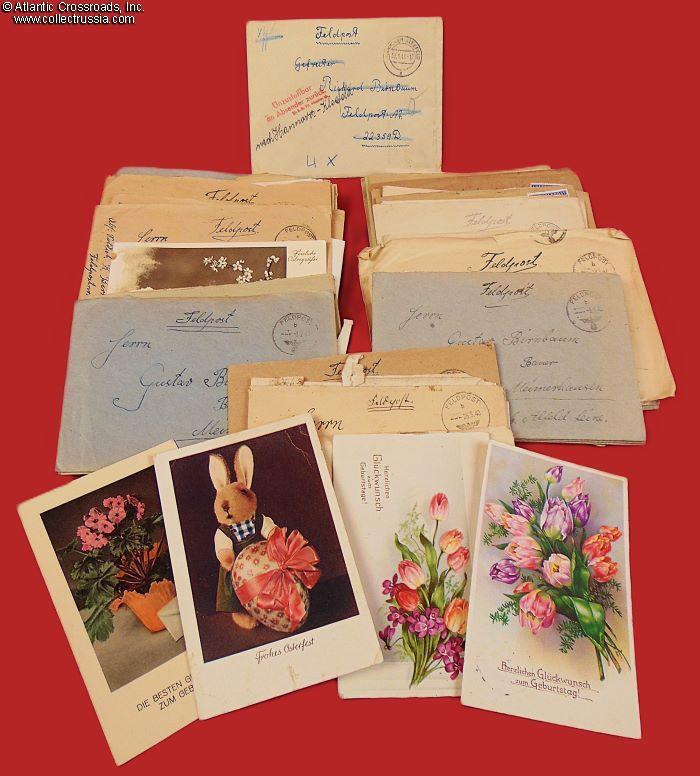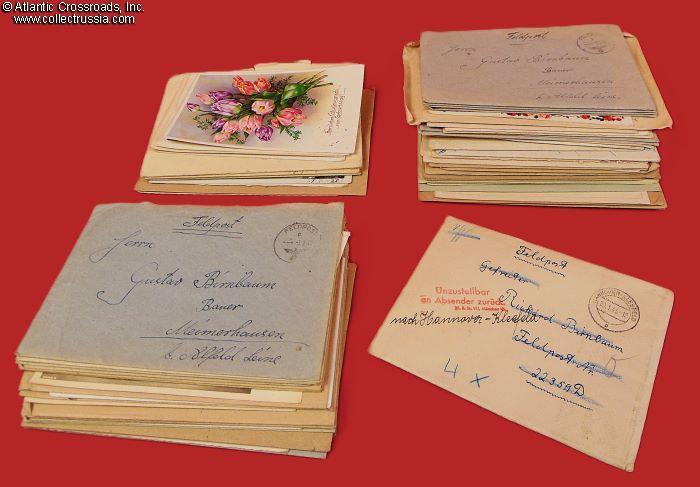


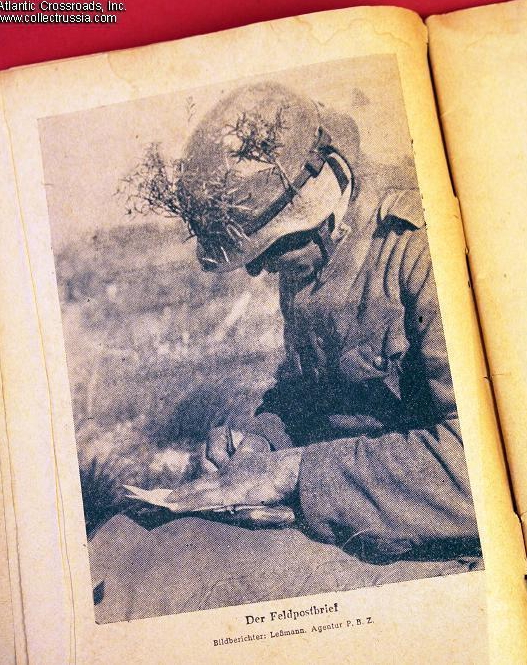


Collection of 69 Letters and Postcards from Private Richard Birnbaum, a WW2 Wehrmacht Artillery EM whose division was destroyed at Stalingrad, 1940 - 1943.
This very large collection provides a rare opportunity to glimpse into, and follow, the mindset of a rank-and-file Wehrmacht soldier as World War 2 progressed from a relative "walk in the park" on the German Western Front at the onset of WW2 to the deadly quagmire and ultimate defeat on the Eastern Front.
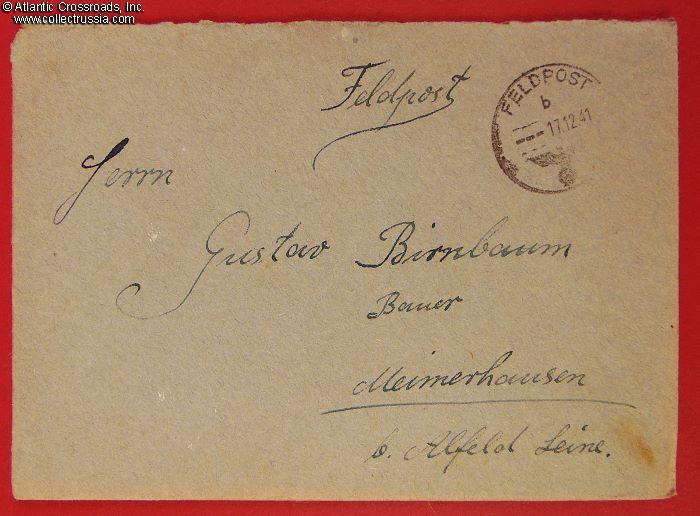
Private Richard Birnbaum, a native of Herne, a city in in North-Rhine Westphalia in the northwest of Germany, was a son of a farmer. Tracking the postal cancels and return addresses of his 1940 correspondence, he was already in the army in February and stationed in Weende, Gottingen, central Germany. From mid-March, the letters have FeldPost 22359 D as the return address. This number was assigned to the 6th Battalion, 171st Artillery Regiment, 71st Infantry Division. From October 1940 to March 1941, it served as a training troop in Konigsbruck. From November 1941 through April 1942, it served in Belgium and France. Then their luck rather abruptly changed.
In April 1941, the division moved to the Przemysl area and, from June 1941, participated in the Russian campaign. It advanced into Ukraine and played a significant role in the Battle of Kiev. In April 1942, the division was rapidly transferred to the Kharkov area to participate in the fighting there. Parts of the division were deployed north of Izium. The division then advanced via Nikolayevka to the Oskol River sector as part of the Operation Case Blue, or "Fall Blau" in German, the massive 1942 offensive in southern Russia aiming to destroy the enemy before the Don River and secure the Caucasian oil fields and passes through the Caucasus Mountains themselves.
The division participated in pursuit battles via Belovodsk, Morozovskaya, and the Chir River to the Don River near Generalov. Further battles took place west of Kalach. From August 1942, the 71st Infantry Division crossed the Don River, captured Karpovka and Rossoshka, until it finally reached Stalingrad. Between 13 October and 18 November, the 71st, together with the 76th and 295th Infantry Divisions was able to advance from the Gumrak Station area, past Mamayev Kurgan, along the Tsaritsa River and wedge into the center of the city in the area between Railway Station 1 and 2, toward the ferry landing and grain silos, reached the Volga and attempted to widen their corridor north and south. There, it got mired in the great meat grinder of street fighting against General Chuikov's 62nd Army until the division surrendered in the southern encirclement on 31 January 1943, five days after its commander General Alexander von Hartman was killed in battle, and a day after the surrender of the 6th Army commander Friedrich Paulus (the fighting in Stalingrad continued for two more days afterwards.)
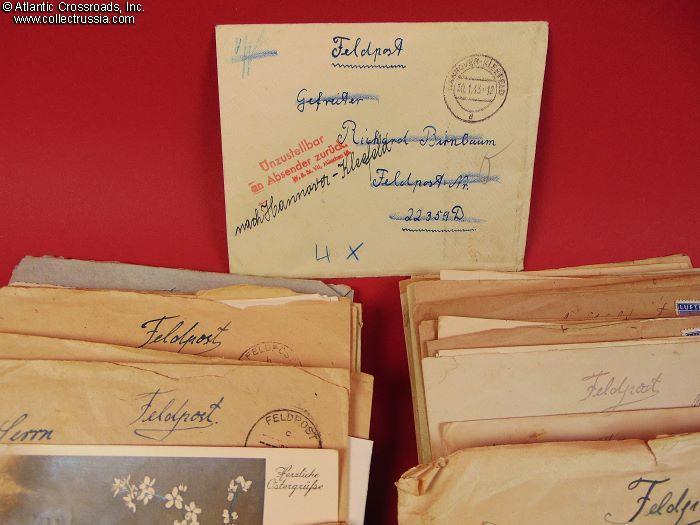
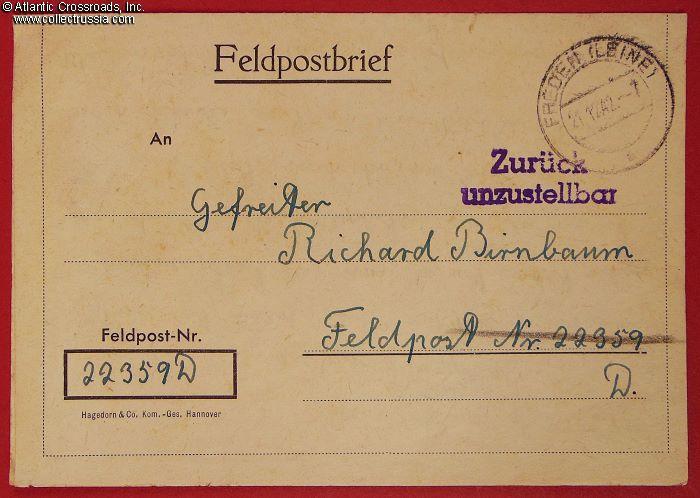
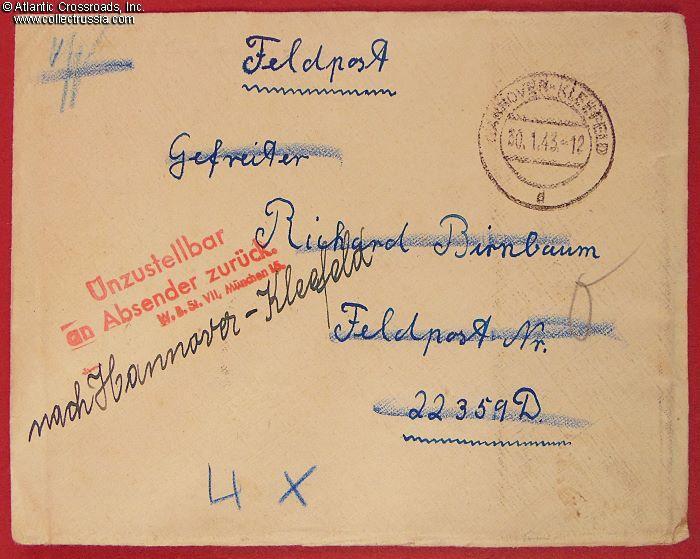
The march on Stalingrad earned Birnbaum a promotion: his 30 August letter has "Gefreiter" (Corporal) before his name. And that was the beginning of a long gap in his letters. His next letter is dated 16 December. Following that, there was just one more, on Christmas Day, that somehow found its destination and proves that he was still alive. All the December letters sent by his brother were returned, stamped as "undeliverable, return to sender."
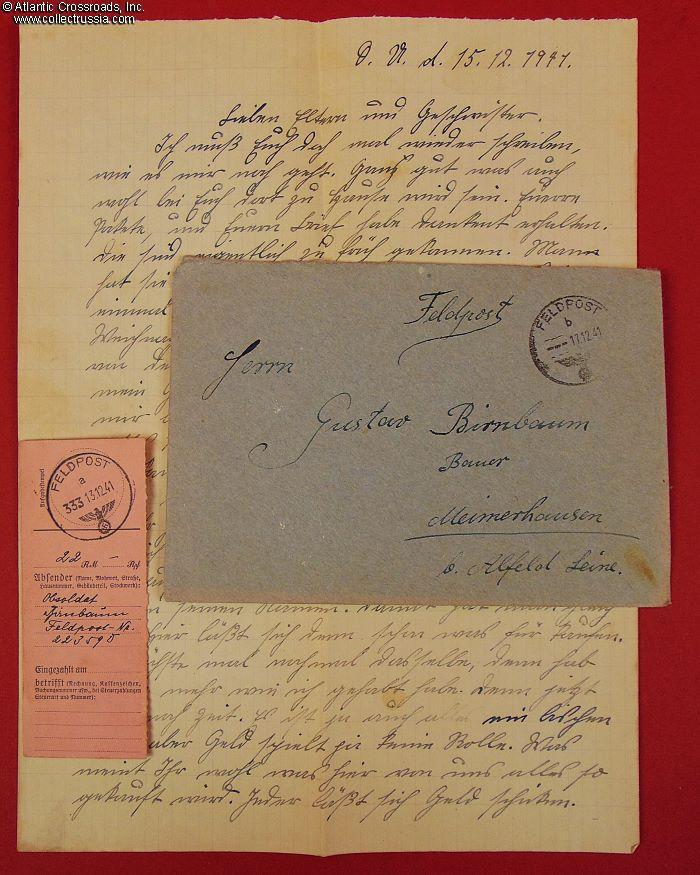
Richard Birnbaum's handwriting never changed over the course of his wartime letters: very steady, nice-looking, with abundant curlicues which, together with his Gothic script, make it absolutely unreadable, - not to Google translate and not to a non-native German speaker. His brother Alvine's handwriting was slightly better. Most of his letters are unopened, returned to sender, but one of them was open, dated 1 December 1942.
Here is what he wrote: "Dear brother, this week, too, I don't want to miss the opportunity to write a few lines. I need to ask again how you're doing. Hopefully, things will still turn out well. That's what I can say about us. We often think of you now, as two more acquaintances from here have fallen, namely Hennri Mochte from Everrode, who is being buried in the garden. He was in your division and lost his life at Stalingrad. The second one is Wilhelm Hagemann from Winsenburg, you know him too, don't you? Robert Droge still has jaundice. You always hear something new, but never anything good. If only this would be over soon. How wonderful it must be to know that you are no longer in danger. Erich Ohlendorf is on vacation, but I don't think I've seen him yet. He only arrived from Berlin on Tuesday, traveled to Hamburg on Thursday, and is still not back on land today. I think he completely lost track of time on the Reeperbahn. But at least he's finally taking his vacation. I'd like to see what he's setting up there. Well, you know it and you know him very well. Helmut Kloht is also here. Otherwise, there's nothing new to report. Now write to me from there sometime. Above all, I want to know how you are. I would love to receive mail from you every day. But unfortunately, that's not possible. I also forgot to mention that Robert Nienstedt was there too. Luise told me she had sent your ring - it's been shipped. Now enjoy the Christmas season and stay cheerful and healthy, and we wish you all the best. Write back soon. Cheers from Brother and Parents. Alwine."
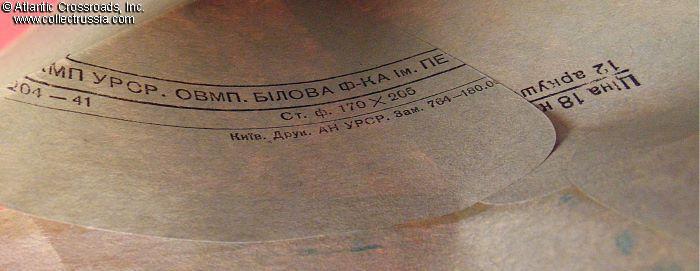
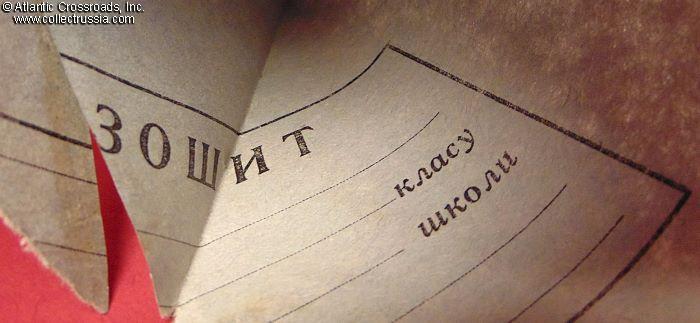
All correspondence items in this collection are in excellent condition. The returned letters we found unopened remain unopened. Unexpectedly, we found that some of the blue postal covers dated as early as 27 November 1941 are made of paper manufactured at a Kiev paper mill and have markings inside in the Ukrainian language identifying them as covers for school notebooks.
Item# 46632
$850.00 Add to cart