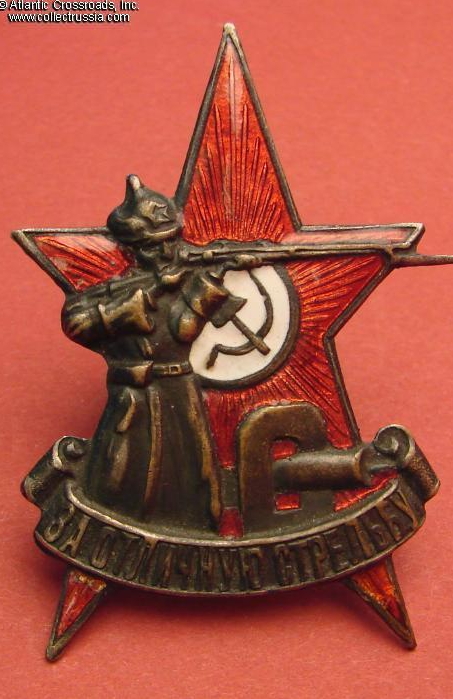
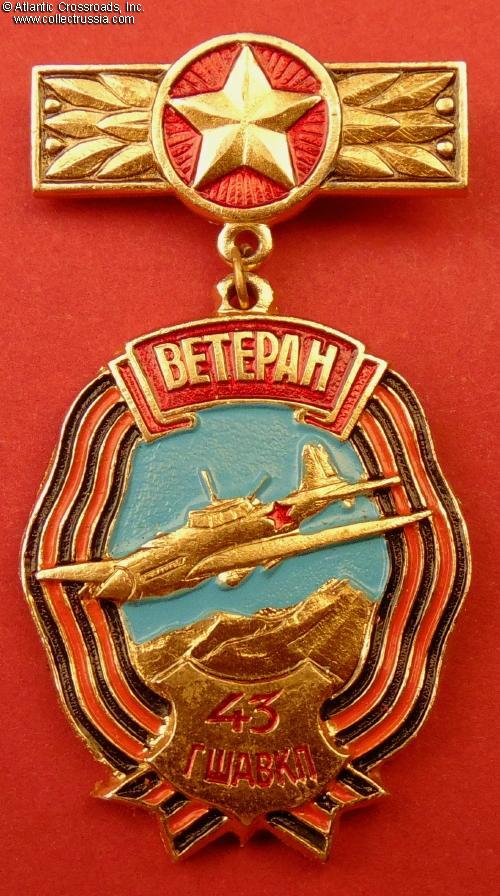
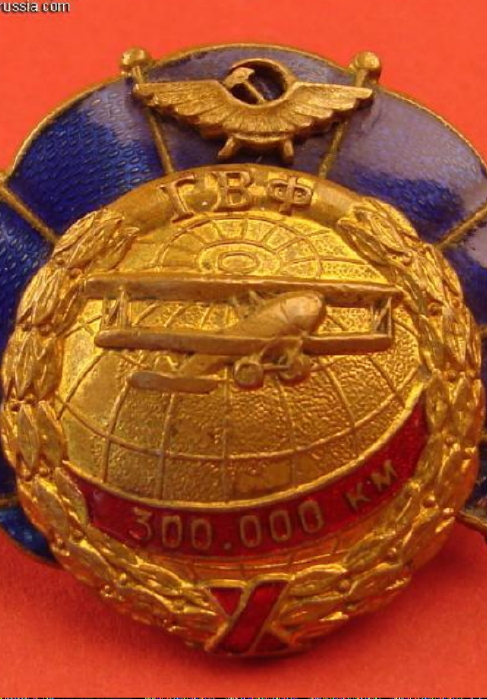
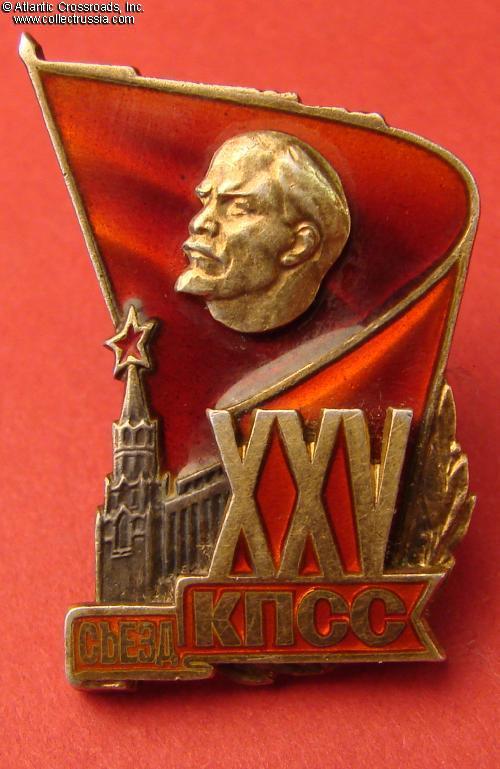
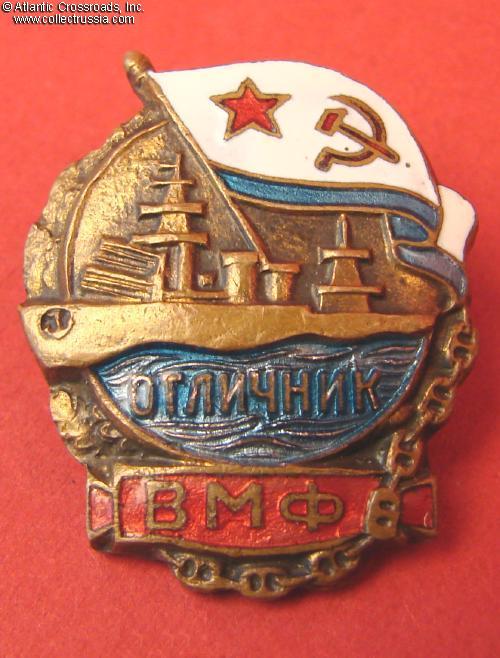
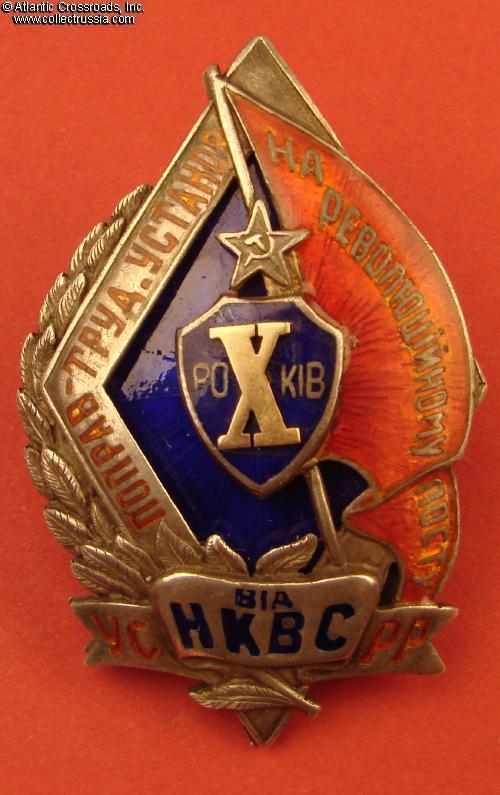
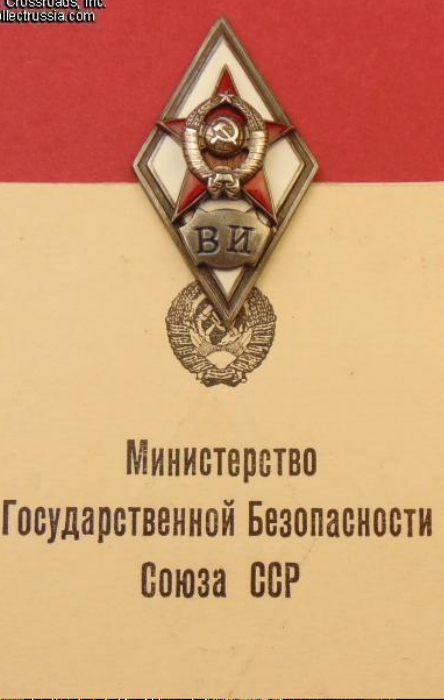
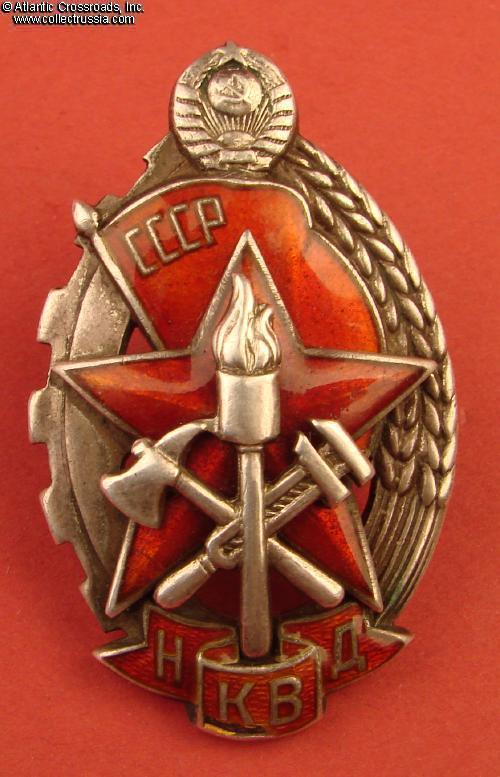
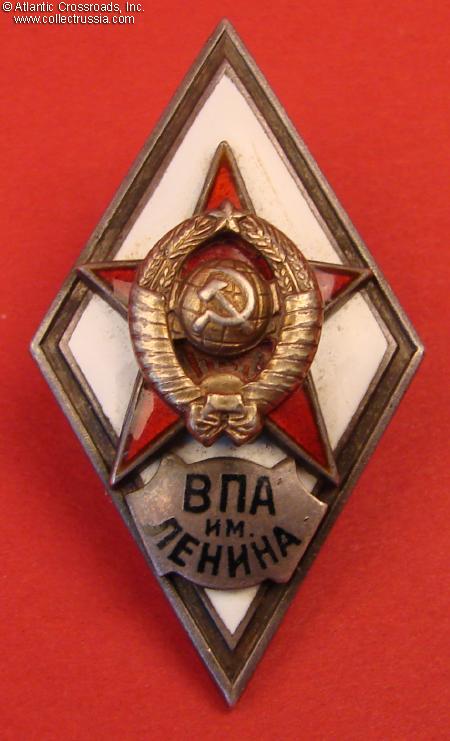
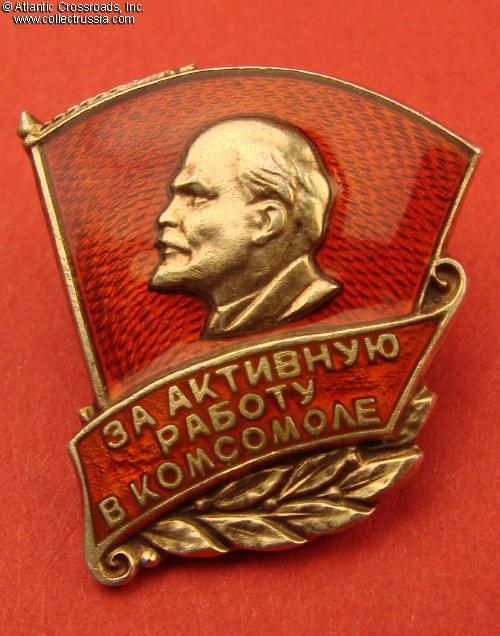
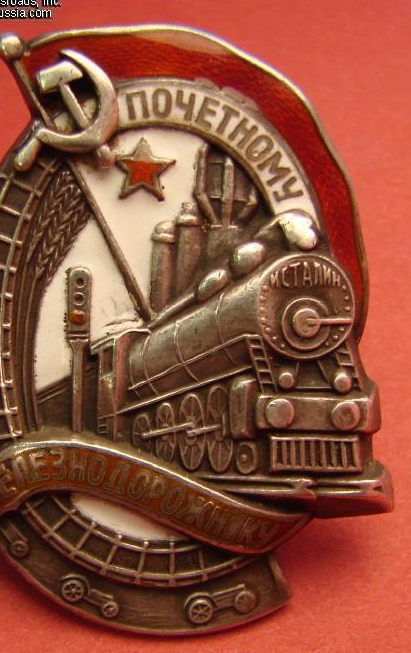
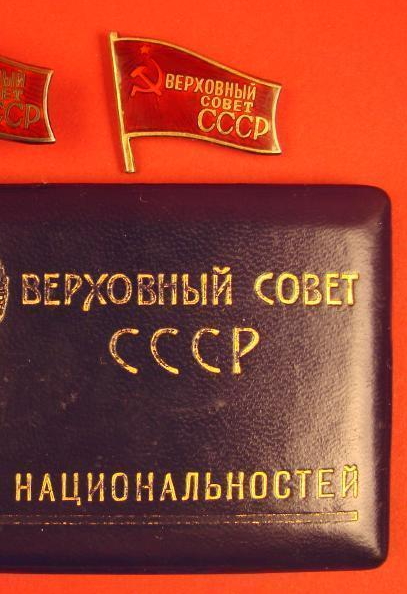
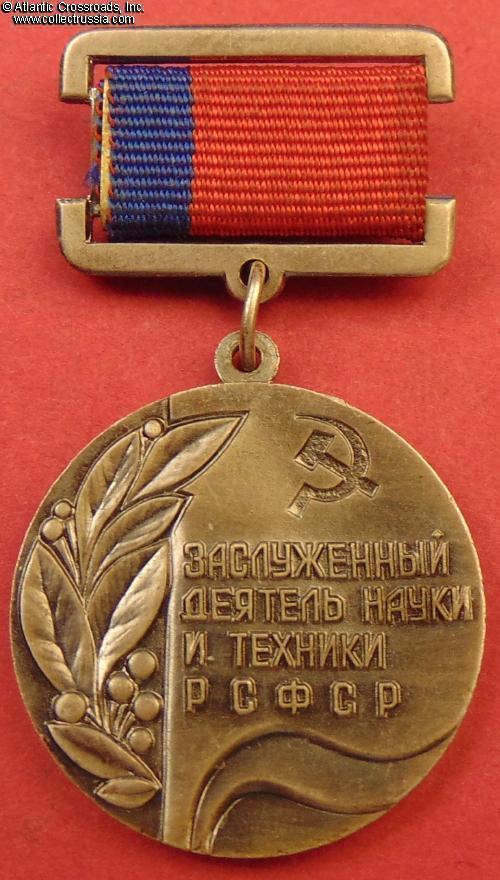










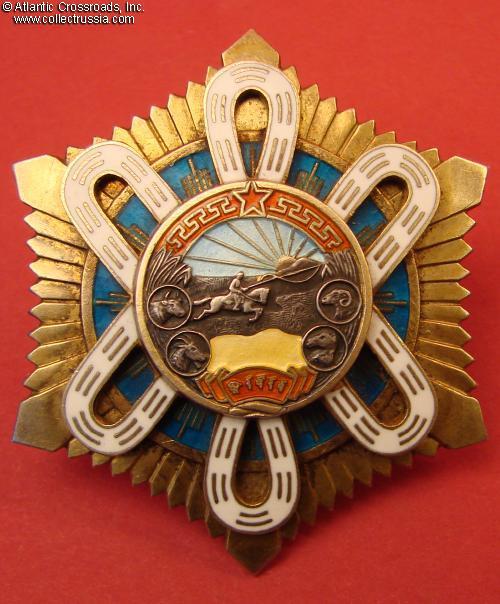
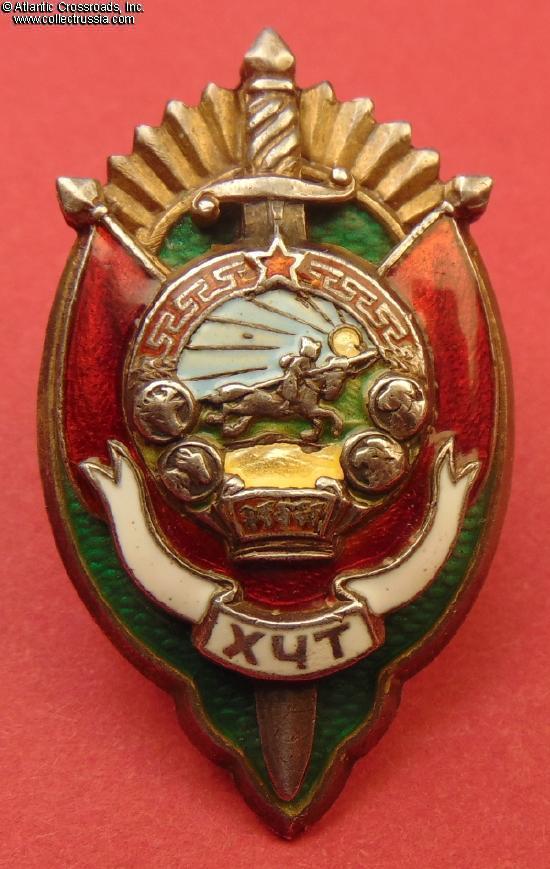
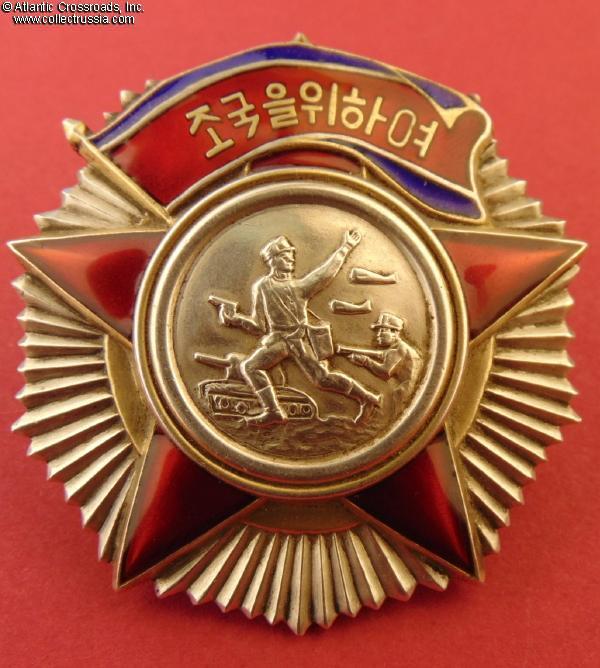
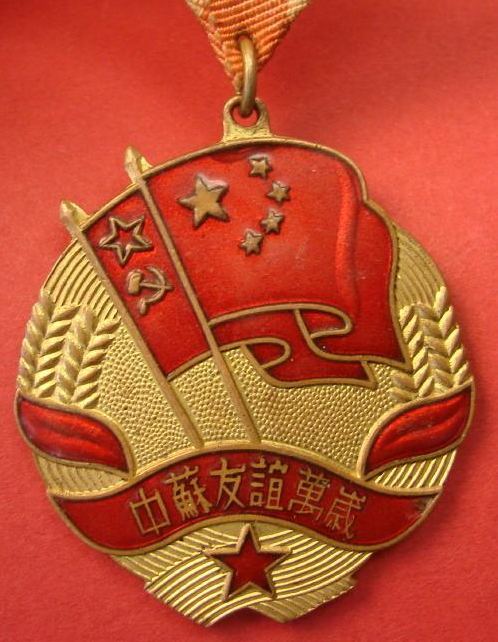
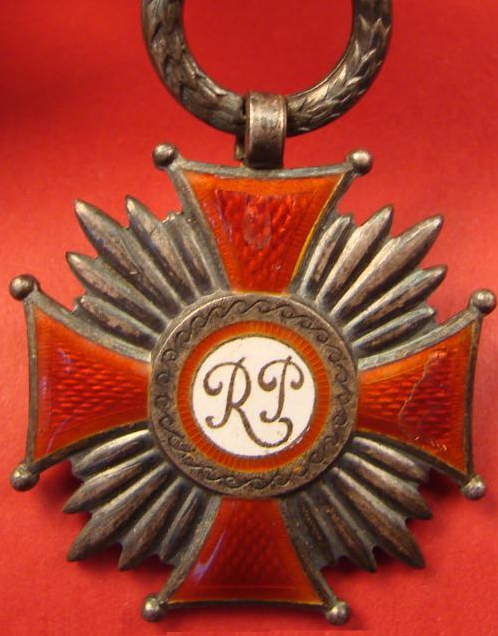
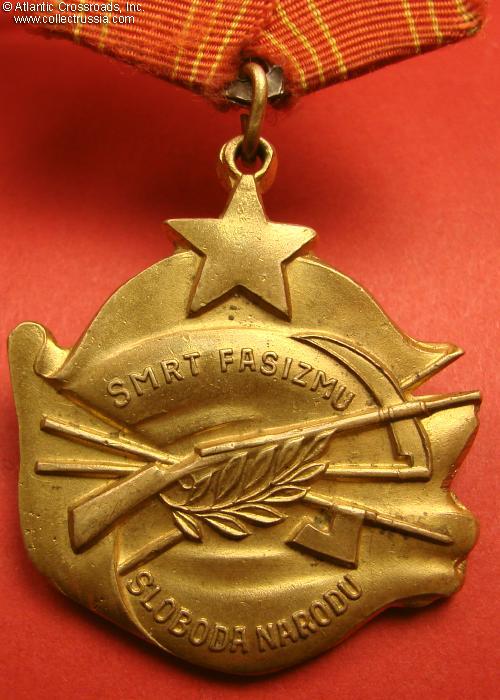



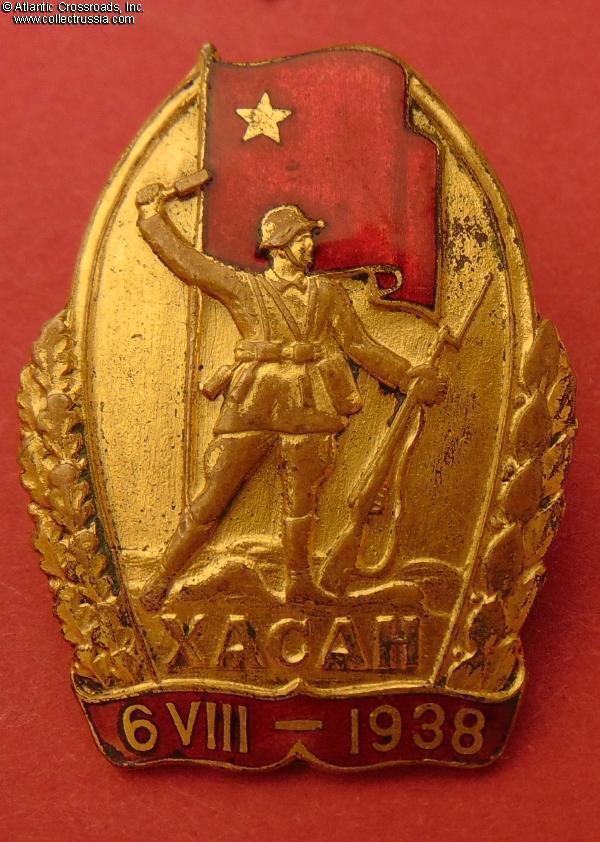
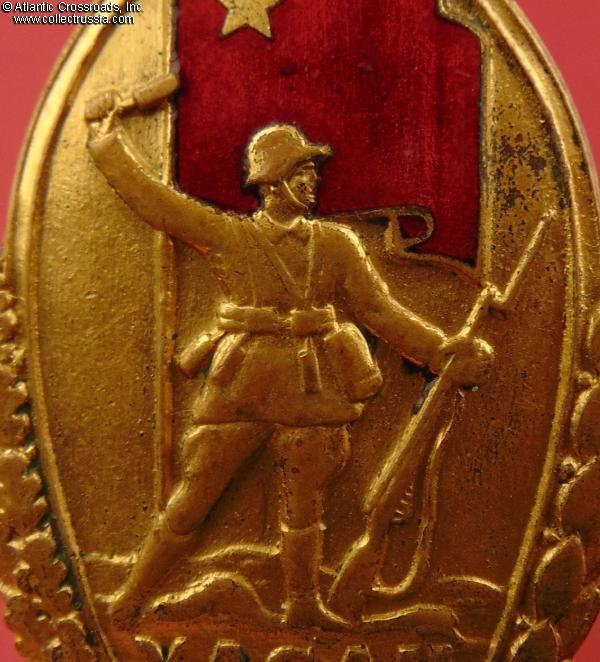
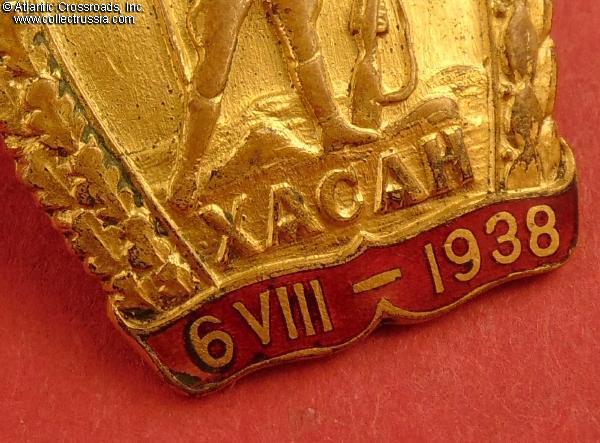
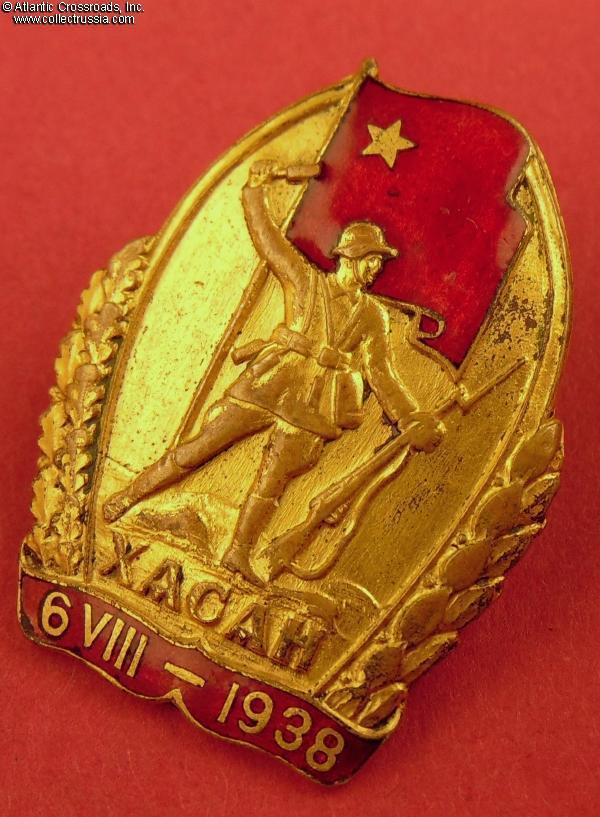
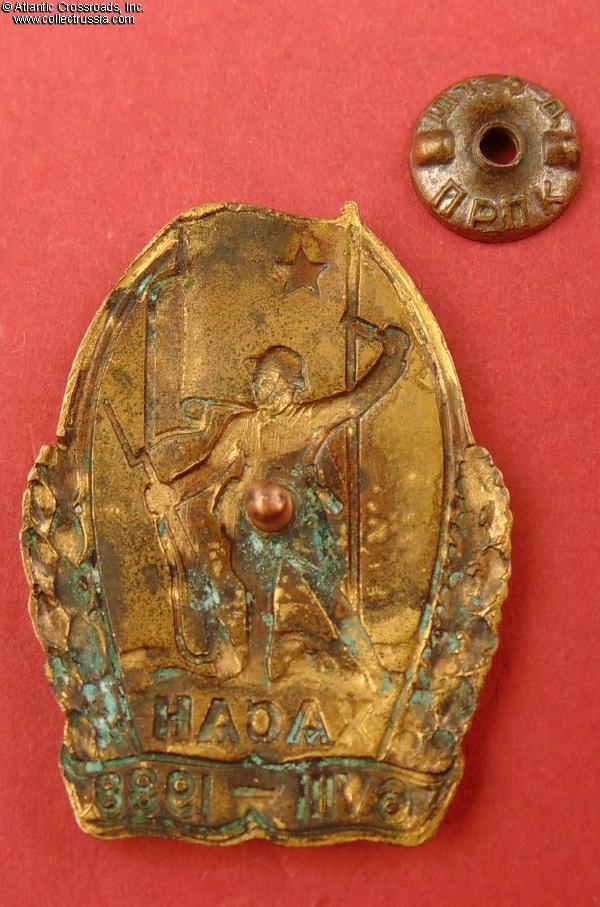
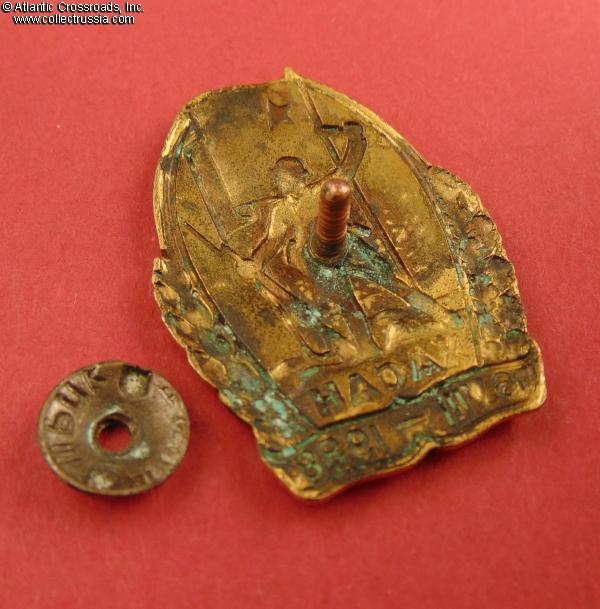
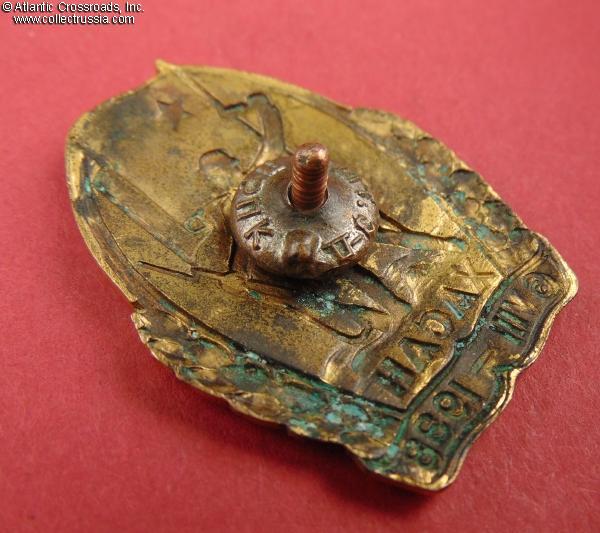
Badge for the Battle of Lake Khasan, 1939-40 issue.
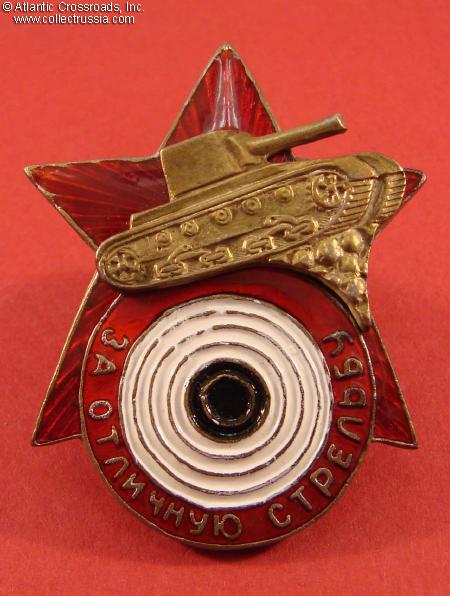
Brass, enamels; 39.4 x 30.1 mm; weighs 12.0 g not including the screw plate.
In very fine condition. The enamel is overall well-preserved and presentable, having a minimal amount of rubbing but still showing a nice luster. There is a single tiny chip in the lower left corner of the red scroll and on the opposite end of the scroll, surface chips that are not penetrating to metal; none of the damage however is easily noticeable without magnification.
The raised details of the artwork are very crisp, practically pristine; the original gold finish on the obverse is beautifu
Brass, enamels; 39.4 x 30.1 mm; weighs 12.0 g not including the screw plate.
In very fine condition. The enamel is overall well-preserved and presentable, having a minimal amount of rubbing but still showing a nice luster. There is a single tiny chip in the lower left corner of the red scroll and on the opposite end of the scroll, surface chips that are not penetrating to metal; none of the damage however is easily noticeable without magnification.
The raised details of the artwork are very crisp, practically pristine; the original gold finish on the obverse is beautifully preserved and bright showing only a mild patina on the high points. On the reverse, there is mild tarnish that adds character, while the gilt finish is still present and clearly visible.
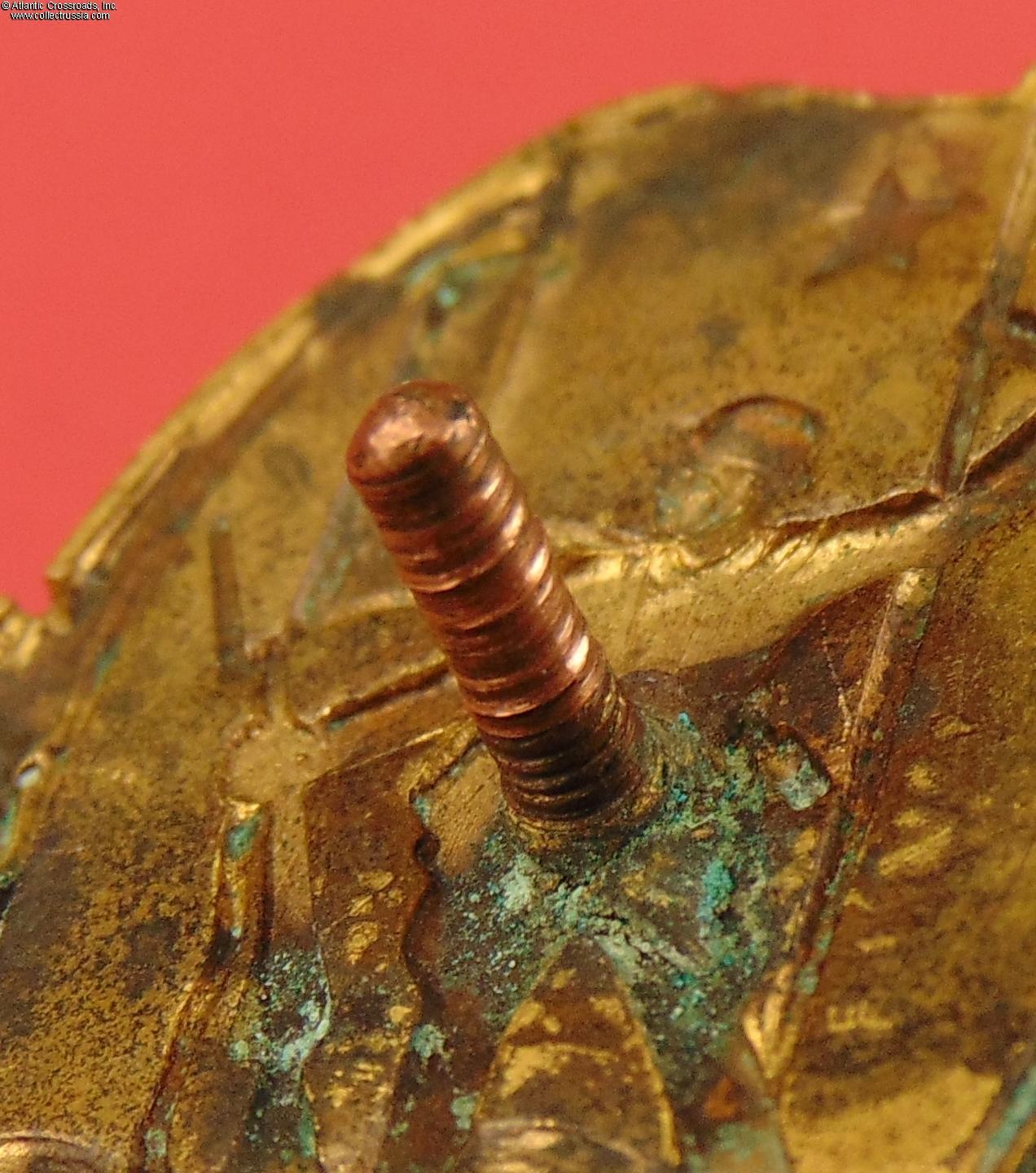
The copper screw post is original and of full length, over 9 mm. It has been re-threaded to accommodate the screw plate which is a replacement roughly contemporary with the badge.
The badge was issued in 1939-1940 as an award - essentially a campaign medal - to all Red Army servicemen who participated in the 1938 battle against the Japanese on the Soviet Far Eastern frontier. The fighting, as the facts showed later, was actually provoked by the Soviet political leadership who had hoped to snatch and fortify a chunk of seemingly unclaimed hilly terrain along the border with Manchuria, a vassal state of Japan.
The almost unopposed initial Soviet move however was countered by a successful Japanese surprise attack that routed Soviet border regimens and retook the disputed territory. This development was becoming a political embarrassment for the Kremlin and called for a major escalation. The numerically superior but poorly coordinated Red Army in the Far East was thus compelled to launch a series of massive combined arms assaults that immediately ran into a quagmire. Although the Soviet offensive ultimately reached its goal thanks to the sheer weight of numbers, the eventual gains proved completely inadequate to the Red Army's losses, especially in tanks. Soviet propaganda duly declared a major defensive victory against the "aggression of the Japanese militarists", but the Soviet commanders in the field knew better. The hard lessons they learned at Lake Khasan were later put to good use in the Battle of Khalkhin Gol.
/Avers 8, p. 446, fig. 2096; Borisov, Badges of the Soviet Armed Force s, fig. 140/
$380.00 Add to cart